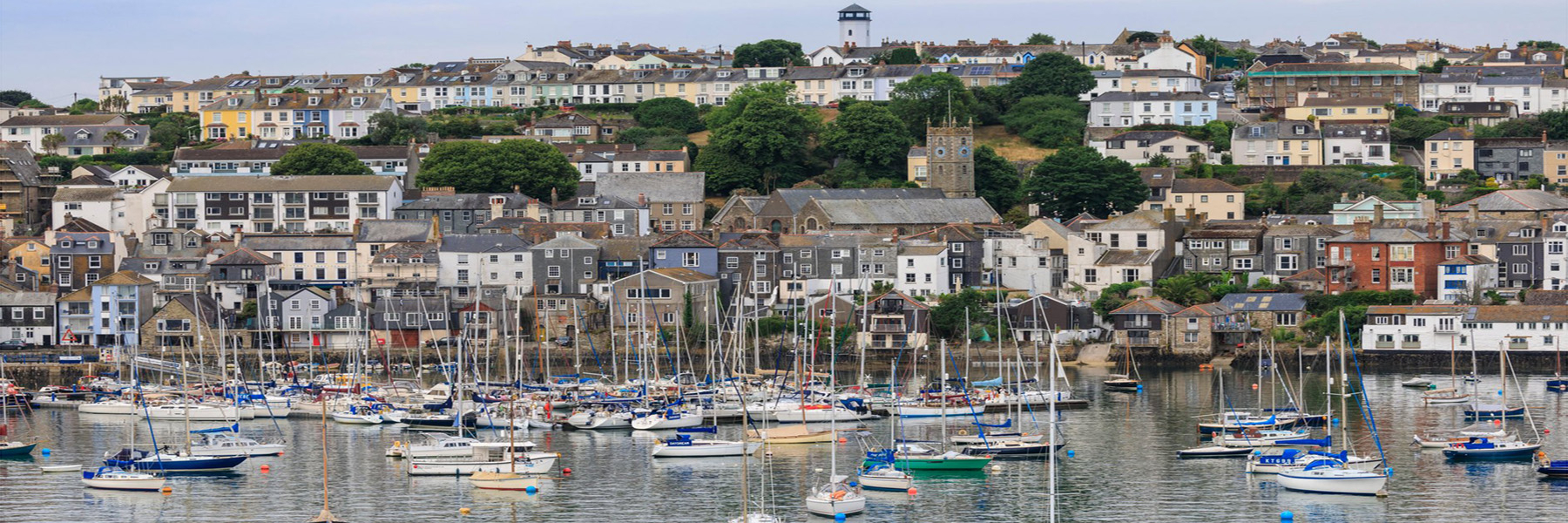
These two towns are almost merged into one settlement, the largest in Cornwall with a combined population of about 31,000. They both front the Fal estuary, known as Carrick Roads, the third largest natural harbour in the world. Falmouth also borders Falmouth Bay where its beaches are located, the largest of which is the south facing Gyllngvase Beach. An elevated promontory contains Pendennis Castle which is one of a pair (the other being in St Mawes) built by Henry VIII to guard against French or Spanish attacks in the 16th century. There are panoramic views from the castle which is well worth a visit.
Penryn was founded some 400 years before Falmouth early in the 13th century and was a religious outpost of the Bishop of Exeter. Its sheltered location meant it was an ideal port location trading in fish, tin and copper, but this diminished in the mid 17th century because the town supported the losing side during the English Civil War. However later in the 19th century large quantities of granite were shipped for civil engineering projects in the UK and abroad.
Today Penryn is a quiet town retaining much of its heritage, with the town hall, containing a museum, being a significant feature. On the site of the former Tremough Convent, in 2004 the Penryn Campus was completed. It contains the Camborne School of Mines, departments of Falmouth University, and departments of the University of Exeter.
Falmouth was founded early in the 17th century by the Killigrew family to whom a monument was later erected. It developed as a port on Carrick Roads, eventually eclipsing Penryn. It became a Royal Navy base due to its strategic location near the entrance to the English Channel. From the late 17th to the mid-19th century Falmouth operated as a Packet or Postal Station, delivering mail to the British Empire.
In the mid-19th century, the railway reached Falmouth, and this enabled the development of tourism and the rapid transport of goods to and from the docks. The National Maritime Museum and many historic and cultural artefacts throughout the town, plus plenty of refreshment venues, contribute to the tourism industry. The Falmouth Shanty Festival is a popular annual event with local and national singing groups participating.
Tall ships, a variety of super yachts and cruise liners are regular visitors to Falmouth, and periodically Falmouth hosts the International Tall Ships Race. Falmouth has a lifeboat station and the Royal Cornwall Yacht Club, sailing and other water sports being popular leisure activities. During World War II Falmouth and other areas fronting Carrick Roads were bases for American troops preparing for the D-Day landings in France. There are 3 ferries from Falmouth to St Mawes, Flushing and Trelissick/Malpas/Truro.
Looking to buy a property in Falmouth and Penryn?
Browse through our collection of exquisite properties in the area.